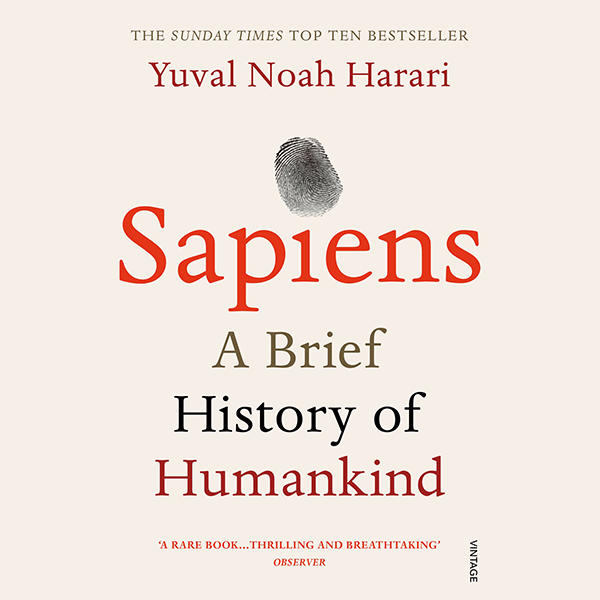
Part 1 Cognitive Revolution
1. An insignificant animal
2. Tree of Knowledge
3. One day that Adam and Eve spent
4. The Great Flood
1. An Insignificant Animal:
This section provides an overview of the evolution of humans and how they became the dominant species on the planet. It explains how Homo sapiens evolved from a small and insignificant animal to the species that now dominates the earth.
Important Sentences:
"Homo sapiens is just one tiny twig on the enormous tree of life."
"For millions of years, humans were merely one species among many."
"In the grand scheme of things, humans are a negligible phenomenon."
"Homo sapiens has managed to conquer the world not because it is the strongest, the smartest, or the fastest species, but because it is the most cooperative and the most communicative."
"Humans evolved the ability to create and believe in things that exist purely in their own imagination, such as gods, nations, and human rights."
2. Tree of Knowledge:
This section focuses on the cognitive revolution that occurred in human evolution, which allowed humans to develop language and begin to think symbolically. It explains how this revolution changed the way humans interacted with each other and the world around them.
Important Sentences:
"The Cognitive Revolution was the decisive turning point in the evolution of Homo sapiens."
"Humans learned to create not just tools and weapons, but also ideas, stories, myths, and gods."
"The Cognitive Revolution enabled humans to create a shared reality that transcended individual experience."
"Language gave Homo sapiens the ability to transmit information and knowledge from one generation to another."
"The Cognitive Revolution marked the beginning of history, because it made possible the creation of large-scale human societies."
3. One Day That Adam and Eve Spent:
This section examines the development of religion and how it has shaped human societies throughout history. It explores the idea that religious beliefs have allowed humans to create a shared sense of identity and to cooperate on a large scale.
Important Sentences:
"Religion is a system of human norms and values that is founded on a belief in supernatural beings."
"Religious myths have been used to explain the mysteries of existence and to give people a sense of purpose."
"Religion has been a major driving force behind human history."
"Religious beliefs have been used to justify wars, persecute minorities, and suppress dissent."
"Religion has also provided solace and comfort to countless individuals and has been a source of inspiration and creativity."
4. The Great Flood:
This section looks at the development of agriculture and the impact it had on human societies. It explains how agriculture allowed humans to settle in one place and form larger, more complex societies, but also resulted in social hierarchies and increased inequality.
Important Sentences:
"The Agricultural Revolution was a decisive turning point in the evolution of Homo sapiens."
"Agriculture allowed humans to settle in one place and create large, permanent settlements."
"Agriculture created a surplus of food, which allowed some people to specialize in tasks other than farming."
"The Agricultural Revolution brought about the rise of social hierarchies and the concentration of wealth and power in the hands of a few."
"The Agricultural Revolution laid the foundations for the rise of the first civilizations and the birth of history as we know it."
1부 인지혁명
1. 하찮은 동물
2. 지식의 나무
3. 아담과 이브가 보낸 어느 날
4. 대홍수
1. 하찮은 동물:
이 섹션에서는 인간의 진화에 대한 개요와 인간이 지구상에서 지배적인 종이 된 방법을 제공합니다. 호모 사피엔스가 어떻게 작고 하찮은 동물에서 현재 지구를 지배하는 종으로 진화했는지 설명합니다.
중요한 문장:
"호모 사피엔스는 거대한 생명나무의 작은 나뭇가지에 불과합니다."
"수백만 년 동안 인간은 많은 종 중 하나에 불과했습니다."
"큰 틀에서 인간은 무시할 수 있는 현상입니다."
"호모 사피엔스가 세상을 정복할 수 있었던 것은 가장 강하거나 똑똑하거나 가장 빠른 종이기 때문이 아니라 가장 협동적이고 의사소통이 잘 되기 때문입니다."
"인간은 신, 국가, 인권과 같이 순전히 자신의 상상 속에 존재하는 것을 창조하고 믿는 능력을 진화시켰습니다."
2. 지식의 나무:
이 섹션은 인간의 진화 과정에서 발생한 인지 혁명에 초점을 맞춥니다. 이를 통해 인간은 언어를 발달시키고 상징적으로 생각하기 시작했습니다. 이 혁명이 인간이 서로 그리고 주변 세계와 상호 작용하는 방식을 어떻게 바꾸었는지 설명합니다.
중요한 문장:
"인지 혁명은 호모 사피엔스의 진화에서 결정적인 전환점이었습니다."
"인간은 도구와 무기뿐만 아니라 아이디어, 이야기, 신화, 신을 창조하는 법을 배웠습니다."
"인지 혁명을 통해 인간은 개인의 경험을 초월한 공유된 현실을 만들 수 있었습니다."
"언어는 호모 사피엔스에게 한 세대에서 다른 세대로 정보와 지식을 전달할 수 있는 능력을 부여했습니다."
"인지 혁명은 대규모 인간 사회의 창조를 가능하게 했기 때문에 역사의 시작을 알렸습니다."
3. 아담과 이브가 보낸 하루:
이 섹션에서는 종교의 발전과 그것이 역사를 통해 어떻게 인간 사회를 형성해 왔는지 살펴봅니다. 그것은 종교적 신념이 인간이 공유된 정체성을 만들고 대규모로 협력할 수 있게 했다는 생각을 탐구합니다.
중요한 문장:
"종교는 초자연적 존재에 대한 믿음에 기초한 인간의 규범과 가치 체계입니다."
"종교적 신화는 존재의 신비를 설명하고 사람들에게 목적의식을 주기 위해 사용되었습니다."
"종교는 인류 역사의 주요 원동력이었습니다."
"종교적 신념은 전쟁을 정당화하고, 소수자를 박해하고, 반대 의견을 억압하는 데 사용되었습니다."
"종교는 또한 수많은 개인에게 위안과 위안을 제공했으며 영감과 창의성의 원천이 되었습니다."
4. 대홍수:
이 섹션에서는 농업의 발전과 그것이 인간 사회에 미친 영향을 살펴봅니다. 그것은 농업이 어떻게 인간이 한 곳에 정착하여 더 크고 복잡한 사회를 형성할 수 있게 했는지 설명하지만, 사회적 계층과 불평등을 증가시키는 결과를 낳았습니다.
중요한 문장:
"농업혁명은 호모 사피엔스 진화의 결정적 전환점이었다."
"농업을 통해 인간은 한 곳에 정착하여 크고 영구적인 정착지를 만들 수 있었습니다."
"농업은 일부 사람들이 농사 이외의 일을 전문으로 할 수 있도록 하는 잉여 식량을 창출했습니다."
"농업혁명은 사회적 위계질서의 부상과 소수의 손에 부와 권력의 집중을 가져왔다."
"농업혁명은 우리가 알고 있는 최초의 문명의 발흥과 역사의 탄생을 위한 토대를 마련했습니다."